


Skills are changing
Employers expect 39% of workers' existing skills to change or become outdated by 2030.
WEF, Future of Jobs 2025
Custom simulations for higher education
We build interactive simulations and gamified assessments around the subjects you teach. Give students realistic problems to work through, and see how they apply their knowledge.
Trusted by institutions around the world


A well-written assignment can leave a lecturer wondering how much the student understands. As AI changes how people study and work, students need opportunities to apply their knowledge and explain their decisions.
Simulations bring that practice into your existing courses. Students work through a situation, see the consequences of their choices and build the judgment they will need beyond university.
Employers expect 39% of workers' existing skills to change or become outdated by 2030.
WEF, Future of Jobs 2025Of surveyed UK undergraduates use generative AI to help with assessed work, including permitted uses.
HEPI 2026 · 1,054 UK undergraduatesA focused pilot gives your team room to test what works in one course, learn from students and shape the next step.
Explore a custom pilotStep inside a few examples of what we build. Each puts the learner in a different role. Your course can be the starting point for the next one.
Accounting & audit
Management says its controls are effective. Students investigate that claim, follow the evidence and defend their conclusion to the audit partner.
Business & communication
An AI customer responds to what the learner says. Students practise handling objections and keeping a conversation productive, then review their approach.
Hospitality management
Students work through a guest arrival while using the hotel systems. Each interaction gives them a reason to apply the procedures they are learning.
Surgery & clinical education
Our Surgeon VR prototype lets students work through surgical procedures with guided practice or assessment. Explore it on desktop, or use a compatible VR headset.
These examples show possible approaches. We adapt the scenario and assessment criteria with your faculty.
Bring us a topic students struggle to apply, a case study you want to make interactive, or an assessment you want to rethink. We'll work with your faculty to build an experience around your learning outcomes and marking criteria.
Discuss a custom simulationGive students a realistic setting to apply your subject, with the learning outcomes defined by your faculty.
Business & accounting · Hospitality · Engineering · Health education · Other areas of your curriculum
A simulation gives each learner a role and a reason to use the course material. We design the challenge around the abilities you want them to develop.
Let students encounter realistic situations before they face them with an employer or client.
Capture the evidence students consider and the explanations behind their decisions.
Use consequences and feedback to encourage another attempt at a difficult skill.
Build in routine scoring and organize work for lecturer review against agreed criteria.
The audit simulator brings decisions and supporting work into an examiner view. We can build this kind of review around the evidence that matters in your subject.
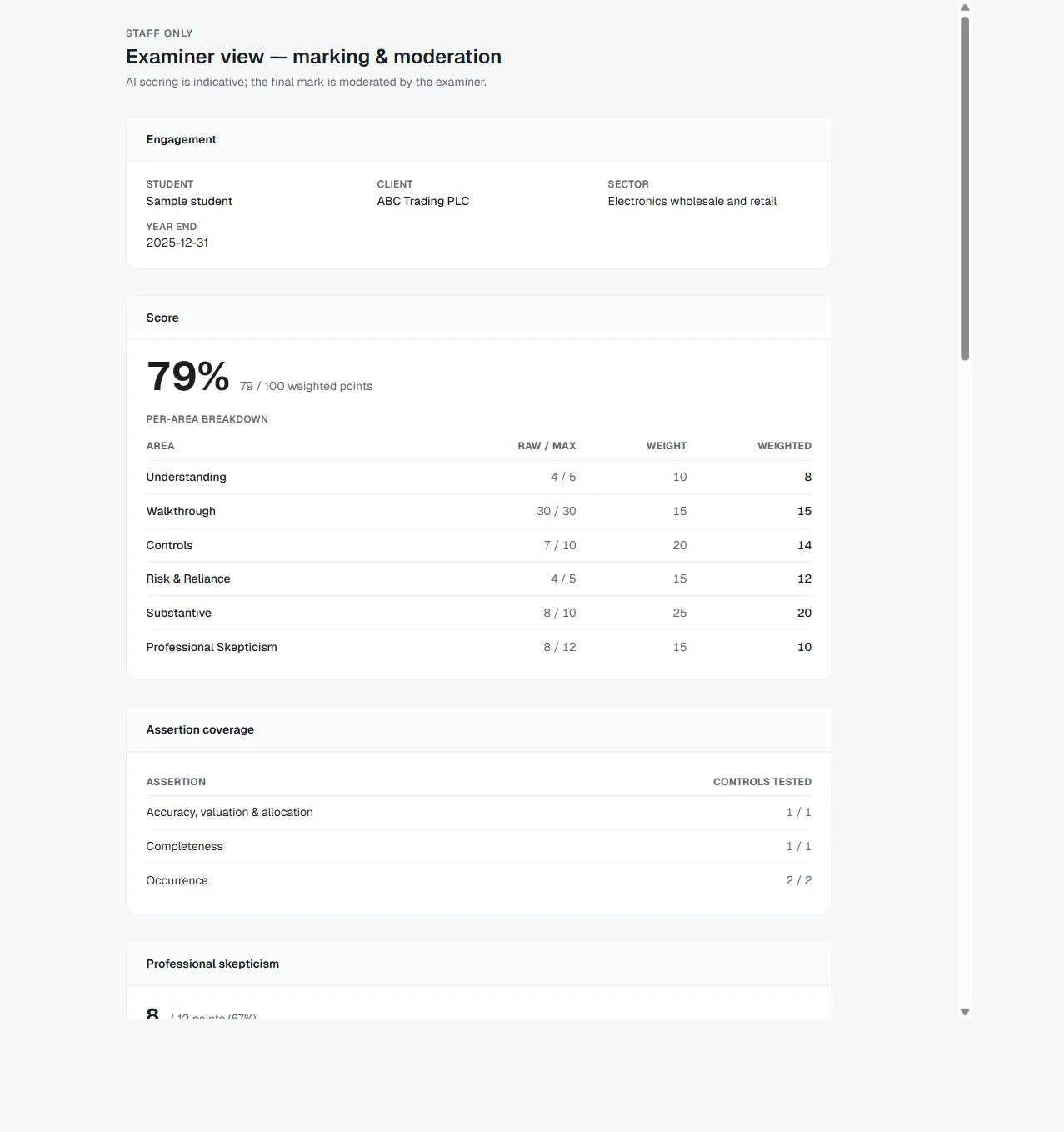
Bring a student's explanations and decisions together so lecturers can see what needs a closer look.
Agree the rubric with your teaching team. Automated feedback can support marking, while lecturers make the final academic judgment.
Design reporting around the misunderstandings and missed steps your faculty need to address.
We can design an experience for guided practice or for assessment. The learning goal determines what help is available and which evidence the lecturer reviews.
Offer hints and feedback, let students revisit a situation and help them understand why a different approach might work.
Set clear rules for assistance, capture decisions and explanations, and pair the activity with lecturer review or a follow-up discussion.
A custom scenario can ask students to check an AI recommendation, challenge unsupported claims and explain when they would seek another source. That makes responsible AI use part of applying the subject.
TEQSA's assessment guidance calls for multiple sources of evidence and opportunities to use AI appropriately. Read the guidance
Our work with universities
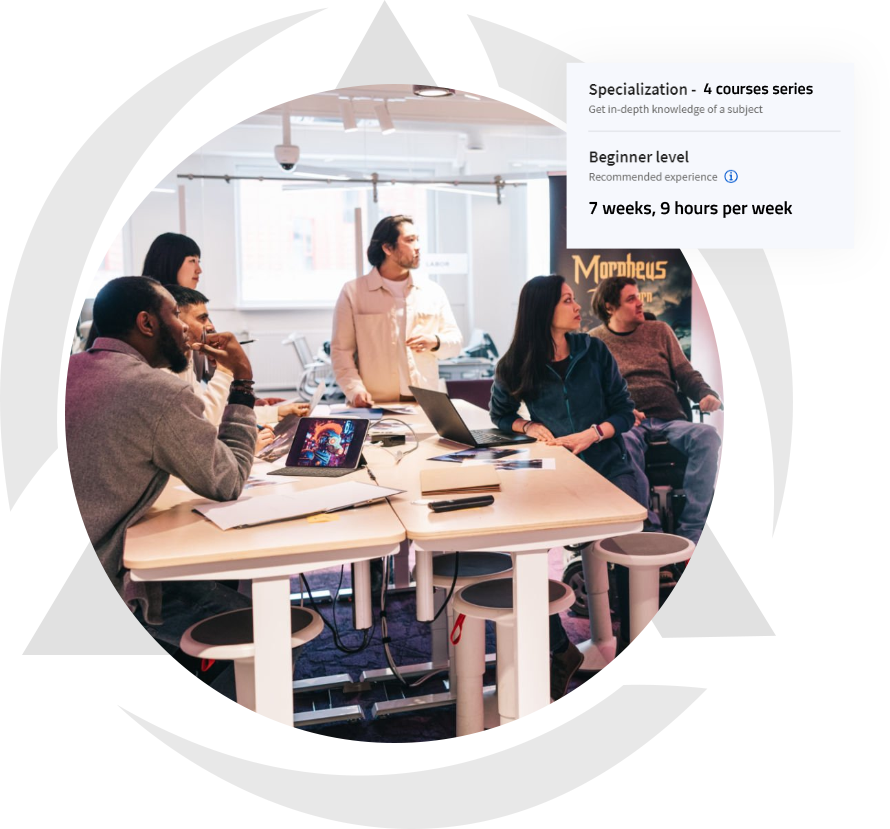
Working with Saudi Arabia's Ministry of Communications and Information Technology and national universities, Gosu Academy delivered faculty training in AI and gaming.
The program brought educators together with researchers and industry practitioners to explore generative AI, game engines and their applications in teaching.
Faculty training in AI and gaming

Build the experience with your faculty, then learn from how students use it.

Choose a topic or assessment and the abilities students need to demonstrate. We explore relevant examples with your teaching team.

Agree the student role, decisions and evidence. Your faculty shape the learning outcomes and marking criteria.

We develop the simulation in stages so your team can try it and give feedback before it reaches students.

Work through the experience together, agree the classroom setup and show lecturers how to review student work.

Run the activity with a first cohort, review the experience and refine it before considering a wider rollout.
Alongside classroom simulations, we support faculty development and university programs in games and emerging technology.
Help your teaching team explore AI and game-based learning, with practical support for using them in the classroom.
Develop course material in game design and development, shaped around your students and academic goals.
Support your campus esports program and student teams with planning and coaching.
Explore collegiate esportsYes. A practical exercise or one assessment is a useful place to start. We agree the learning outcomes and review the pilot with your faculty before discussing a larger rollout.
Yes. Your faculty provide the subject expertise and the abilities they want students to demonstrate. We work together on the scenario, evidence and rubric, with opportunities to review the experience during development.
They can capture how a student investigates and responds to a situation, including the evidence behind a decision. For assessed work, we agree rules for AI use and combine the activity with appropriate lecturer review, discussion or supervision.
Yes. We design marking support around criteria agreed with your faculty. Routine scoring and suggested feedback can reduce repetitive work, while lecturers retain responsibility for final academic decisions.
We review your learning platform, devices and accessibility needs during scoping. Sign-in, grade export, language support and student-data arrangements are agreed for each build before a classroom rollout.
The demos can be tried on a computer in a web browser. Surgeon VR also offers a headset mode for compatible VR devices. For a custom build, we design the controls and introduction around your students and the devices available to them.


